
A dryer that takes two or three cycles to dry a normal load is sending a clear message: the air is not moving the way it should. Lint buildup is often the cause, but crushed ducting, a blocked exterior cap, long vent runs, and poor installation can create the same frustrating problem. Knowing how to measure dryer airflow can help you recognize a restriction before it becomes a fire risk, raises your power bill, or puts added strain on your dryer.
For most homeowners, the goal is not to diagnose every technical detail. It is to confirm whether air is reaching the outside properly and to know when a professional cleaning or repair is the safer next step.
Why Dryer Airflow Matters
Your dryer removes moisture by pulling air through the appliance, heating it, moving it through the clothes, and exhausting that warm, damp air outdoors. When the vent line is restricted, moisture stays in the drum longer. Clothes take longer to dry, the dryer runs hotter, and lint is more likely to collect inside the machine and duct.
Poor airflow is more than an inconvenience. The U.S. Fire Administration identifies failure to clean dryer vents as a leading factor in residential dryer fires. A clean lint screen helps, but it only catches part of the lint created during each load. The rest can settle in the dryer cabinet, transition duct, vent line, and exterior termination.
Airflow testing gives you a useful snapshot of the system. It can show that a problem exists, although it does not always identify the exact location of the blockage.
Start With the Simple Warning Signs
Before using a meter, pay attention to how the dryer performs. A healthy vent system should allow a typical load to dry in roughly one normal cycle, though drying time depends on fabric type, load size, washer spin speed, and the dryer itself.
Warning signs include clothes that remain damp after a full cycle, a dryer or laundry room that feels unusually hot, a burning or musty smell, visible lint around the dryer or outdoor vent cap, and an exterior vent flap that barely opens while the dryer runs. If you have a gas dryer and smell gas, stop using it immediately and contact the appropriate service professional or gas utility.
A sudden change in drying performance is especially meaningful. If the dryer worked well a few weeks ago and now needs extra cycles, a developing restriction is likely.
How to Measure Dryer Airflow With a Basic Check
The simplest test is done at the exterior vent hood, not behind the dryer. This is where you can see whether the exhaust air is actually leaving the home.
First, make sure the lint screen is clean. Run the dryer on an air-only or no-heat setting if your model offers one. If not, use a regular drying cycle with a few clean, damp towels inside. The towels create a realistic load and help the dryer operate as it normally would.
Go outside and check the vent termination. You should feel a steady stream of air, and the damper flap should open freely. The air will feel warmer during a heated cycle, but temperature is not the same as airflow. A weak puff of air, a fluttering flap, or no movement at all points to a possible restriction.
This hand test cannot provide a precise measurement, but it is still useful. It is often enough to tell the difference between normal exhaust and a system that needs attention.
Do not place paper, plastic, fabric, or your hand inside the exhaust opening. Exterior caps can have sharp edges, screens may hold lint, and moving dampers can pinch fingers. If the cap is high on an exterior wall or roof, do not climb to inspect it yourself.
Use an Anemometer for a More Useful Reading
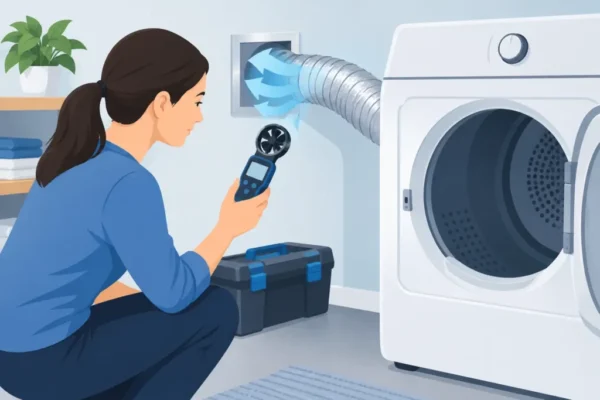
A handheld anemometer measures air velocity, usually in feet per minute. It is a practical tool for homeowners who want a more objective reading than the hand test provides. For dryer vents, use it at the outside termination while the dryer is operating with a load.
Hold the meter squarely in front of the exhaust opening without blocking the airflow. Take several readings across the opening, because velocity can vary from the center to the edges. Record the average reading along with the date, dryer setting, and whether you tested with a load inside.
The most valuable use of an anemometer is comparison. If you test after a professional cleaning and see a strong, consistent reading, that becomes your baseline. A noticeably lower result months later can indicate lint accumulation, a stuck damper, snow or debris around the outlet, or damage to the vent line.
It is tempting to look for one perfect airflow number, but dryer vent systems are not all built the same. Airflow depends on the dryer model, duct diameter, equivalent vent length, number of bends, termination style, and how clean the system is. A long vent run with several elbows naturally creates more resistance than a short, straight run.
For that reason, a low airspeed reading alone does not prove that the dryer is defective or the vent is unsafe. It does tell you that further inspection may be worthwhile, especially when paired with slow drying times.
Converting Air Velocity to Airflow
Airflow is often expressed in cubic feet per minute, or CFM. To estimate CFM, multiply the average air velocity by the area of the vent opening.
For example, a 4-inch round duct has an interior area of about 0.087 square feet. If the average measured air velocity is 1,000 feet per minute, the estimated airflow is about 87 CFM.
This calculation is only an estimate. Exterior hoods, dampers, louvers, and irregular openings make it difficult to measure the full air stream accurately. The anemometer can also be affected if it is held too close, too far away, or at an angle. Treat the result as a trend, not a final diagnosis.
Professional Dryer Airflow Testing Is More Precise
Technicians can test dryer exhaust performance with equipment designed for ventilation systems. Depending on the situation, this may include calibrated airflow meters, pressure testing, visual inspection equipment, and tests at multiple points in the vent path.
Pressure testing can be particularly helpful because it shows how much resistance the dryer is working against. Excessive back pressure can reduce drying performance and may cause some dryers to shut down or display an airflow-related error code. The acceptable limit depends on the dryer manufacturer, so a technician should compare the result with the appliance specifications rather than relying on a generic number.
A professional inspection also looks beyond airflow. The technician can check for foil or plastic transition ducts, disconnected joints, screws that catch lint, crushed sections behind the dryer, improper vent materials, bird nests, damaged vent caps, and vent routing that does not meet manufacturer or local code requirements.
Test Before and After Cleaning
One of the best ways to measure dryer airflow is to compare the system before and after vent cleaning. If airflow improves significantly after cleaning, lint buildup was likely a major restriction. If it does not improve, the issue may be a damaged duct, a poor vent design, a clogged dryer blower housing, or an appliance problem.
Avoid disconnecting the dryer vent and operating the dryer indoors as a shortcut test. Exhausting warm, humid air and lint into the house can create moisture problems, affect indoor air quality, and is especially unsafe with gas dryers. A comparison test should be completed safely, with the vent connected and exhaust directed outdoors.
After cleaning, check that the transition duct behind the dryer is not crushed when the appliance is pushed back into place. Even a freshly cleaned vent line cannot perform well if the connector is sharply bent or flattened.
When to Schedule Service
Schedule a dryer vent inspection if drying times are getting longer, the outside flap does not open properly, you see lint around the exterior cap, or your meter readings fall well below your normal baseline. Annual cleaning is a sensible preventive schedule for many households. Homes with large families, frequent laundry, long vent runs, pets, or high-lint items may need service more often.
YYT Safe Dryer Vents approaches airflow concerns as a home safety issue, not just a cleaning task. A thorough service should identify the reason airflow is restricted and address conditions that could cause the same problem again.
Your dryer should not have to work overtime to dry a load of towels. A quick exterior check today can give you the confidence to keep using it safely or the clear signal to have the vent system inspected before a small restriction becomes a bigger problem.