
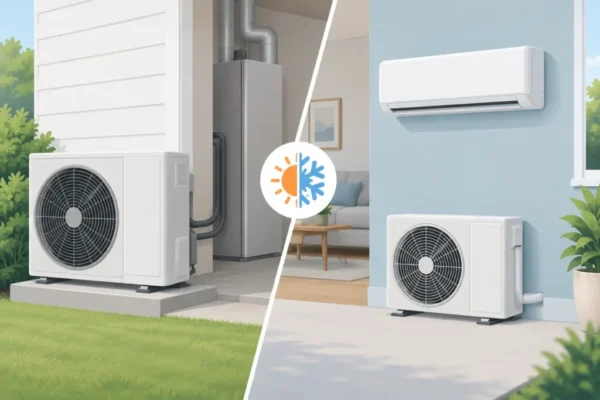
A homeowner may hear “heat pump” and “mini split” used as if they are two completely different systems. The truth is more useful: a mini split is a type of heat pump. When comparing heat pump versus mini split, the real decision is usually between a ducted heat pump system and a ductless mini-split system.
Both can provide efficient heating and air conditioning, often using far less energy than older electric baseboards, window AC units, or fuel-burning equipment. The right choice depends on your home’s layout, existing ductwork, room-by-room comfort needs, and how much maintenance your system has received over time.
Heat pump versus mini split: the key difference
A heat pump moves heat rather than creating it through combustion or electric resistance. In summer, it pulls heat from inside the home and releases it outdoors, much like an air conditioner. In winter, it reverses the process and gathers available heat from the outdoor air to bring indoors.
A traditional central heat pump typically uses ductwork. One outdoor unit connects to an indoor air handler, which sends conditioned air through supply vents in multiple rooms. If your home already has a well-designed duct system, this can be a practical whole-home solution.
A mini split, also called a ductless heat pump, works on the same basic principle but delivers heating and cooling through one or more wall-mounted, floor-mounted, or ceiling-mounted indoor units. Each indoor unit serves a specific room or zone. Small refrigerant lines run between the outdoor unit and the indoor heads, so large air ducts are not required.
That distinction affects installation, comfort, appearance, upkeep, and cost.
When a ducted heat pump makes sense
A central, ducted heat pump is often a strong fit for a home that already has ductwork in good condition. It can heat and cool the entire house from a central system, keeping indoor equipment mostly out of sight and maintaining a familiar vent-based setup.
For homeowners replacing an older furnace and central air conditioner, a ducted heat pump can be a straightforward upgrade. It also works well when you prefer consistent whole-home temperatures instead of adjusting comfort room by room.
The condition of the ductwork matters more than many people realize. Leaky, crushed, dirty, or poorly insulated ducts can waste conditioned air before it reaches the rooms where you need it. That can lead to uneven temperatures, higher utility bills, extra strain on the equipment, and more dust circulating through the home.
Before installing a ducted system, have the ducts inspected for obvious leaks, disconnected sections, restricted airflow, and cleanliness concerns. A high-efficiency heat pump cannot fully make up for a duct system that is losing air in an attic, crawlspace, or wall cavity.
When a mini split is the better option
Mini splits are especially useful in homes without existing ducts. They are common choices for older homes, additions, garages, finished basements, sunrooms, and rooms that never seem to match the temperature of the rest of the house.
Because each indoor unit has its own controls, a mini split gives you zoning. You can keep a frequently used living room comfortable without conditioning an unused guest room to the same level. That flexibility can reduce wasted energy and settle common household disagreements about the thermostat.
A mini split may also avoid the cost and disruption of adding ductwork to a home that was never designed for it. Instead of opening walls and ceilings to install large ducts, the installer runs smaller refrigerant lines and electrical connections to the indoor heads.
There are trade-offs. Indoor heads remain visible in the room, and their placement needs planning. A unit installed in the wrong location may blow directly onto seating areas, struggle to circulate air evenly, or be harder to service. For a larger home, multiple indoor heads can also make the installation more complex and expensive than homeowners expect.
Cost is more than the installation quote
The up-front price of either option varies based on home size, electrical upgrades, system capacity, insulation, equipment efficiency, and installation difficulty. A simple single-zone mini split may cost less than a full ducted replacement. A multi-zone mini-split system serving an entire house can cost as much as, or more than, a central ducted heat pump.
Look beyond the initial quote. Consider the age and condition of your existing ducts, whether certain rooms need separate temperature control, and whether you expect to renovate or add living space later. A less expensive installation that leaves major comfort problems unresolved may not be the best long-term value.
Operating costs also depend on how the system is used. A mini split can be very efficient when you condition only occupied spaces. A ducted heat pump can be highly efficient too, particularly when ducts are sealed, properly sized, and located within conditioned areas of the home.
In colder regions, equipment selection is critical. Modern cold-climate heat pumps can perform well in low temperatures, but capacity and efficiency decline as outdoor temperatures drop. Some homes may need supplemental heat during severe cold spells. Ask an HVAC professional to size the equipment for your local winter conditions, not just for cooling needs.
Comfort, air quality, and everyday use
Neither system is automatically better for indoor air quality. Good results depend on clean components, proper airflow, filtration, humidity control, and regular maintenance.
A ducted system filters air at a central return grille, then distributes it through the home. The filter needs regular replacement, and the duct system should remain clean and intact. If return ducts pull air from dusty, damp, or unconditioned spaces, that can affect the air moving through your home.
Mini splits use washable filters inside each indoor head. These filters are easy to overlook because they are not always visible from across the room. When filters clog with dust, pet hair, or household debris, airflow drops. The unit may become noisier, less efficient, and less effective at heating or cooling the room.
Mini splits also have indoor coils, blower wheels, drain pans, and condensate lines that need attention. In cooling mode, moisture is removed from the air. If the drainage system becomes dirty or blocked, it can contribute to odors, water leaks, and microbial buildup inside the unit.
Maintenance protects performance and equipment life
Whether you choose ducted or ductless equipment, preventive maintenance is part of the investment. Heat pumps run year-round in many homes, so they accumulate wear and debris faster than a system used only for summer cooling.
Homeowners can help by keeping outdoor units clear of leaves, grass, snow buildup, and stored items. Do not cover the unit tightly while it is operating, and leave enough open space around it for airflow. For mini splits, clean the washable filters according to the manufacturer’s instructions, especially in homes with pets, smokers, or frequent cooking.
Professional service goes further. A thorough visit may include checking refrigerant performance, electrical connections, airflow, coils, drains, blower components, filters, and the overall condition of the system. Ducted systems may also need duct inspections, while mini splits benefit from detailed cleaning of indoor heads and drainage components.
If you notice weak airflow, musty smells, water dripping from an indoor head, ice buildup, new noises, rising energy bills, or rooms that will not hold temperature, do not wait for the system to fail completely. Early service can often prevent a smaller issue from turning into a costly repair.
Choosing the right fit for your home
Choose a ducted heat pump when you have dependable existing ductwork, want a central whole-home system, and prefer a less visible indoor setup. Choose a mini split when your home lacks ducts, you need to solve comfort problems in specific rooms, or you want independent temperature zones.
Some homes benefit from both. For example, a central heat pump may serve the main house while a mini split handles a finished basement, addition, or room above a garage. The best setup is not always an either-or decision.
Your heating and cooling system should make your home safer, more comfortable, and easier to manage – not leave you guessing about strange odors, weak airflow, or rising bills. A properly selected system and consistent upkeep give you a much better chance of getting the comfort and efficiency you paid for.