
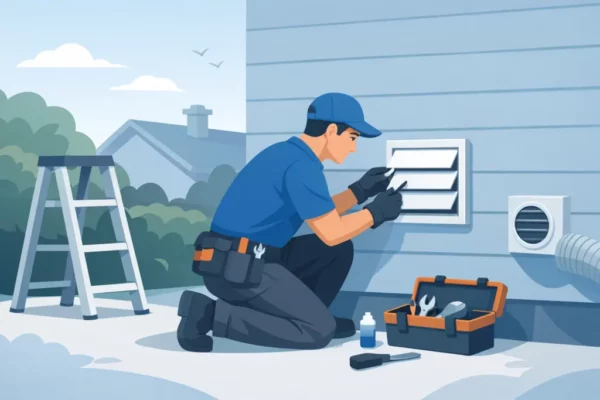
A dryer that suddenly takes two or three cycles to dry a normal load may be telling you something from the outside of the house. An exterior vent flap stuck shut, partly open, or clogged with debris can restrict airflow where your dryer needs it most. That restriction can waste energy, strain the appliance, and allow heat and lint to build up in the vent line.
The exterior hood may look like a small part of your home’s venting system, but it has an important job. It opens when air is exhausted outdoors and closes when the system is off, helping keep out rain, pests, and cold air. When it cannot move freely, it is worth addressing promptly.
Why an exterior vent flap gets stuck
Exterior vent flaps are exposed to everything the weather brings: wind, rain, snow, freezing temperatures, dust, leaves, and insects. Over time, lint can also collect around the opening, especially when a dryer vent has not been cleaned thoroughly. Even a thin coating of lint mixed with moisture can become sticky enough to interfere with the flap’s movement.
In colder areas, snow and ice are common causes. Moist exhaust air can condense around the cap during a cold spell and freeze the flap in place. A flap may also become stiff because of corrosion, a bent hinge, damaged louvers, or an improperly installed vent hood.
Not every stuck flap is caused by the flap itself. A blockage farther inside the duct can reduce the pressure reaching the exterior hood, making it appear as though the flap is not opening. Crushed transition ducts behind the dryer, a disconnected vent line, bird nests, or heavy lint buildup can all produce similar symptoms.
Signs your exterior vent flap needs attention
Start by noticing what has changed inside your home. Longer dry times are one of the clearest warning signs. Clothes may come out hot but still damp, or your laundry room may feel warmer and more humid than usual while the dryer runs.
You may also see little or no movement at the exterior flap when the dryer is operating. From a safe position outdoors, observe the vent hood during a cycle. The flap should open under the force of the exhaust and allow air to flow freely. It does not need to swing wide open, but it should not remain sealed shut or barely move.
Other signs include a burning or musty smell, visible lint around the exterior cap, condensation on nearby siding, and a dryer that shuts off early because it is overheating. These issues do not automatically mean there is a fire hazard, but they do mean the dryer vent system should be inspected rather than ignored.
What you can safely check first
Before touching the exterior hood, turn off the dryer and allow it to cool. Never reach into a vent opening while the appliance is running, and do not climb onto a roof or use an unstable ladder to access a high vent cap. Exterior venting is often harder to reach than it appears.
If the cap is accessible from the ground, look for obvious debris around the flap. Leaves, grass clippings, lint, spider webs, and snow can often be carefully cleared away by hand while wearing gloves. Check whether the flap moves freely with very gentle pressure. It should return to its resting position without scraping, binding, or sticking.
If ice is holding the flap closed, do not force it. Forcing frozen plastic or metal can crack the hood, bend the hinge, or damage the siding around it. Wait for conditions to improve or arrange for a professional inspection. A recurring freeze-up may point to a vent cap design problem, excess lint buildup, or a duct that is not exhausting properly.
Avoid using tape to hold a flap open. It may seem like a quick solution, but it leaves the vent exposed to rain, insects, rodents, and outdoor air when the dryer is off. It also hides the underlying issue instead of correcting it.
When a stuck vent flap is a dryer safety concern
A dryer produces heat, moisture, and lint every time it runs. It depends on unrestricted airflow to move those byproducts safely outside. When the exterior opening is blocked, heat and lint can accumulate in the ductwork and inside the dryer. That can increase wear on the appliance and raise the risk of a dryer-related fire.
The concern is greater if you notice repeated overheating, a hot dryer cabinet, a burning smell, or lint collecting behind the dryer. Stop using the appliance until the restriction is checked. Continuing to run extra cycles does not solve the problem. It can make the blockage worse while increasing energy use.
For gas dryers, proper venting is especially critical. Any appliance with combustion requires careful attention to safe exhaust and manufacturer requirements. If you suspect a damaged or disconnected vent line, it is best to have a qualified technician evaluate the full system.
Cleaning versus replacing the exterior vent cap
Sometimes professional cleaning is all that is needed. A technician can remove lint buildup throughout the duct, clear the termination point, verify airflow, and confirm that the flap opens and closes as intended. This is often the right solution when the cap is in good physical condition and the issue is caused by debris.
Replacement makes more sense when the hood is cracked, corroded, bent, missing a flap, or repeatedly sticking despite cleaning. A damaged cap can allow water and pests into the vent line, while a poorly designed or incorrectly installed cap may restrict airflow from the start.
The right replacement depends on the appliance and vent location. Dryer vents need a termination designed for dryer exhaust, with a flap or damper that opens freely. Fine mesh screens are generally a poor choice for dryer outlets because lint can collect on them quickly. Bathroom fans, kitchen exhaust systems, and HVAC equipment may have different termination requirements, so vent caps should not be treated as one-size-fits-all parts.
Why the whole vent line should be inspected
Focusing only on the visible flap can miss the larger issue. The duct from the dryer to the outdoors may have turns, long runs, hidden connections, or areas where lint has settled. If airflow is weak, the exterior flap is often the last component to show the problem, not the first.
A complete dryer vent service checks the transition duct behind the appliance, the condition and routing of the vent line, the exterior termination, and the airflow leaving the home. It can also identify loose connections that leak lint and moisture into walls, basements, crawl spaces, or laundry areas.
This is one reason annual maintenance is a practical choice for many households. Homes with large families, frequent laundry loads, long vent runs, pets, or older ductwork may benefit from more frequent attention. The goal is not simply to remove lint once. It is to keep the entire exhaust path working safely and efficiently over time.
Preventing a stuck exterior vent flap
A quick visual check each season can help catch problems before laundry starts taking longer. Keep the area around the vent hood clear of landscaping, stored items, snow buildup, and loose debris. While the dryer is running, check occasionally that air is exhausting outside and the flap responds normally.
Inside, clean the lint screen after every load and wash it periodically if fabric softener residue has built up. This supports airflow, but it does not replace cleaning the vent line. Lint that passes beyond the screen can still settle in the duct and near the exterior cap.
If the flap repeatedly sticks, do not settle for a temporary workaround. YYT Safe Dryer Vents can inspect the vent line, clean the buildup, and recommend a durable repair or replacement when the cap itself is no longer doing its job. A freely moving vent flap is a small detail that helps protect your dryer, your energy bill, and the people in your home.
When your dryer gives you a warning sign, treat it as a chance to correct a small problem before it becomes a costly one.