
A load that once dried in 45 minutes but now needs two or three cycles is not just frustrating. It can be a warning that hot, moisture-filled air is not leaving your home as it should. This dryer exhaust guide explains what homeowners need to know about the system behind the dryer, the warning signs of restricted airflow, and the maintenance that helps protect your home.
Your dryer creates heat, lint, and moisture every time it runs. The exhaust system is designed to move those byproducts outdoors. When lint collects inside the vent line, the exterior cap sticks, or the duct route is poorly installed, the dryer has to work harder to do a basic job. That means longer dry times, unnecessary energy use, added wear on the appliance, and a higher fire risk.
What Is a Dryer Exhaust System?
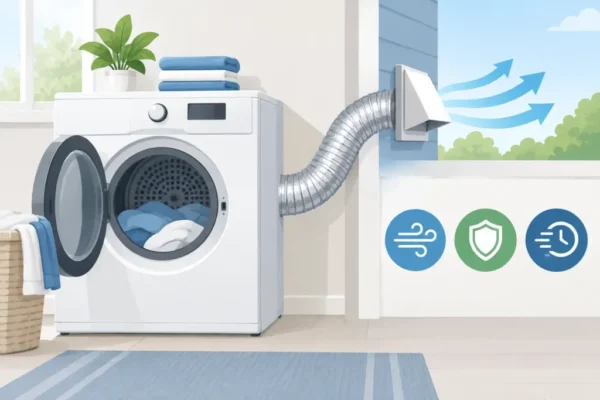
A dryer exhaust system, often called a dryer vent, is the path that carries warm air, moisture, and lint from the back of the dryer to the outside of the house. It includes the transition duct behind the appliance, the ductwork running through the home, and the exterior termination cap.
The word “exhaust” matters because this system must vent outdoors. A dryer should never discharge into an attic, crawlspace, garage, or indoor room. Sending moist air into those areas can contribute to condensation, mold concerns, and damage to building materials. It also keeps lint inside spaces where it does not belong.
A properly functioning system has a clear, reasonably direct path to the exterior and a vent cap that opens freely when the dryer operates. The exact layout depends on the home. A laundry room near an exterior wall may have a short run, while a laundry room in the center of a home may have a longer and more complex route. Longer runs generally need more attention because every turn and added foot of duct can reduce airflow.
Why Dryer Exhaust Maintenance Matters
Lint is highly combustible. Even if you clean the lint screen after every load, fine lint still moves beyond the screen and into the ductwork. Over time, it can cling to the duct walls, gather at bends, and build up near the outside vent cap.
Restricted airflow also causes practical problems before it becomes a major safety concern. Clothes take longer to dry, the dryer may feel unusually hot, and repeated cycles can raise utility costs. The appliance is forced to run longer than necessary, which can put extra strain on heating elements, motors, sensors, and other components.
Regular cleaning is not only about removing lint. A proper service can identify crushed transition ducts, disconnected sections, improper materials, damaged vent caps, bird or pest nesting, and vent routes that are likely to clog again quickly. Finding those issues early gives homeowners a chance to correct the cause instead of paying for repeated cleanings without lasting improvement.
Signs Your Dryer Exhaust Needs Attention
Many homeowners do not see the ductwork, so they assume the dryer itself is failing when laundry starts taking too long. In some cases, the dryer does need repair. But airflow should be checked first, especially when the problem develops gradually.
Watch for these common warning signs:
- Clothes need more than one cycle to dry, especially towels, jeans, and bedding.
- The laundry room feels hot, humid, or has a burning or musty odor during operation.
- The top, sides, or door of the dryer feel excessively hot.
- Lint appears around the dryer connection or outside near the vent cap.
- The exterior vent flap does not open while the dryer is running.
- Your dryer shuts off early, displays an airflow-related error, or has needed frequent repairs.
One sign alone does not confirm a blockage, but it is worth investigating. For example, heavy items naturally take longer than lightweight clothing. However, if ordinary loads have changed noticeably, do not keep adding cycles and hoping the problem goes away.
Safe Materials and Installation Basics
The short connection between the dryer and the wall is one of the most overlooked parts of the system. It should be as short and straight as practical, without being crushed when the dryer is pushed back into place. A kinked connector can restrict airflow just as much as lint buildup.
Flexible plastic or vinyl ducting is not a safe choice for dryer exhaust. It can sag, collect lint, and is more vulnerable to heat. Foil-style flexible ducts can also be problematic, particularly when they are thin, easily crushed, or used for a long concealed run. Smooth, rigid metal ducting is generally the preferred material for the main exhaust route because it supports better airflow and is easier to clean thoroughly.
Joints should be secured correctly without screws protruding into the airflow path, where lint can snag and accumulate. Duct tape is not a permanent repair for dryer vent connections. Heat and age can cause it to fail. Proper metal tape and appropriate mechanical connections are better suited to the job.
The outdoor vent cap also deserves a close look. It must release air freely while keeping weather and pests out. Screens on dryer exhaust caps are often a poor solution because they can trap lint quickly. If the cap is damaged, stuck shut, or covered by snow, landscaping, or debris, the dryer cannot exhaust efficiently.
How Often Should a Dryer Vent Be Cleaned?
For many households, an annual professional dryer vent cleaning is a sensible maintenance schedule. Homes with large families, frequent laundry loads, long vent runs, multiple bends, or pets that shed heavily may need service more often. The same can be true for rental properties, shared laundry areas, and homes with older ductwork.
Between professional visits, clean the lint screen before every load. Wash the screen periodically with warm water and mild soap if you use dryer sheets or fabric softener products. Those products can leave a nearly invisible film that reduces airflow through the screen. Make sure the screen is fully dry before reinstalling it.
It is also helpful to check the outside cap while the dryer is running. You should see the damper move and feel a steady flow of warm air. Do not reach into the opening or attempt to force a stuck damper from outside. If airflow seems weak, arrange an inspection rather than running the dryer repeatedly.
What Homeowners Can Do and When to Call a Pro
Basic upkeep is valuable, but it has limits. Homeowners can keep the lint screen clean, avoid overloading the dryer, leave enough room behind the appliance to prevent crushing the connection, and watch for changes in drying performance.
A deeper cleaning is more involved than vacuuming around the dryer. Ducts may travel through walls, ceilings, basements, or crawlspaces, and a partial cleaning can push lint farther down the line or miss a blockage at a bend. The right approach depends on duct length, material, access points, and the condition of the exterior termination.
Professional service is especially worthwhile if you have a long vent route, an upstairs laundry room, a concealed duct, a recurring airflow problem, or visible damage. A trained technician can clean the full line, inspect connections and the exterior cap, and explain whether a repair or replacement would improve safety and performance.
At YYT Safe Dryer Vents, the goal is not simply to remove lint and leave. A careful inspection helps identify the conditions that caused the buildup, so homeowners can make informed decisions about the next step.
A Better Habit for a Safer Home
Dryer exhaust maintenance is easy to postpone because the system is mostly out of sight. But the signs often show up in everyday routines: loads that will not dry, a hot laundry room, and a dryer that seems to run forever. Treat those changes as a reason to check the airflow, not as a reason to keep adding cycles.
A clean, properly vented dryer supports safer laundry days, more reliable appliance performance, and less wasted energy. Scheduling maintenance before a problem becomes urgent is one small home-care decision that can make a meaningful difference all year long.