
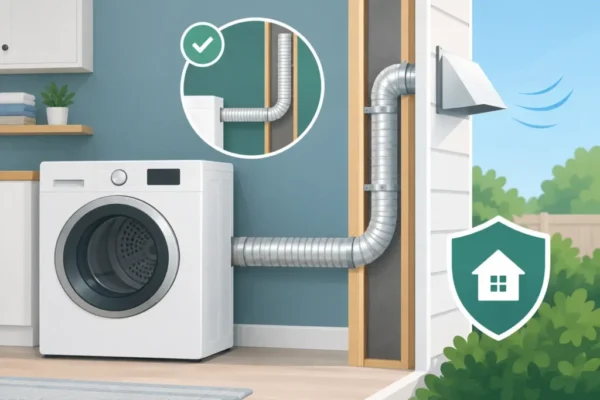
A dryer that takes two or three cycles to finish a normal load is not always an appliance problem. Often, the vent path is too long, crushed behind the machine, poorly routed, or restricted by lint. This dryer duct routing guide explains what a safe route should look like, what can go wrong, and when a professional inspection is the smart next step.
Your dryer has one job after it heats the air: move that hot, moisture-filled air safely outdoors. A clean, properly routed duct supports faster drying, lower energy use, and a reduced fire risk. A poor route makes the dryer work harder while lint and heat build up where they should not.
Start With the Shortest Practical Route
The best dryer duct route is generally the shortest, straightest path from the dryer to an exterior wall or roof termination. Every extra foot of duct and every turn adds resistance to airflow. That resistance slows the exhaust, encourages lint to settle inside the line, and can leave moisture trapped in the system.
A short path is not always possible, especially in homes where the laundry room sits near the center of the house, in a basement, or on an upper floor. In those cases, the route still needs to be planned around airflow rather than convenience alone. Running a vent through an attic, crawlspace, or ceiling cavity can be appropriate when installed correctly, but it requires careful attention to duct material, support, insulation, access, and termination.
Dryer manufacturers and local building codes set limits on allowable duct length. A common starting point is a maximum developed length of 35 feet, but that distance is reduced for elbows and can vary by dryer model and local requirements. The dryer installation manual and applicable local code should always control the final design.
Use the Right Duct Material
For most residential dryers, smooth, rigid metal duct is the preferred material for the concealed portion of the vent system. It has a smooth interior that allows lint to travel through the line more easily and is less likely to sag or trap debris than flexible products.
Flexible foil or plastic duct should not be used inside walls, ceilings, floors, attics, or crawlspaces. Plastic duct is especially unsafe because it can degrade with heat and may contribute to fire spread. Thin foil flex duct also tears easily and its ridges collect lint quickly.
A short, properly listed flexible transition duct may be used between the dryer and the wall connection when needed. This is the visible connector behind the appliance, not the full vent route. It should be as short as practical, fully extended without sharp bends, and positioned so the dryer does not crush it when pushed back into place.
The duct should normally be 4 inches in diameter unless the appliance manufacturer specifies otherwise. Reducing the duct size may seem like an easy way to work around framing or tight spaces, but it restricts airflow and creates a long-term maintenance problem.
Keep the Inside of the Duct Smooth
The small details at duct joints matter. Connections should be secured with approved metal foil tape or clamps, not duct tape, which dries out and fails over time. Fasteners should not protrude into the airflow path, because screw tips catch lint. A joint that looks secure from the outside can become a lint collection point on the inside.
Duct sections also need support. Long unsupported spans can sag, creating low spots where moisture and lint collect. A properly supported line stays as straight and smooth as the home’s layout allows.
Limit Elbows and Sharp Turns
A turn in a dryer vent is more than a change in direction. It is a point where airflow slows down and lint is more likely to settle. A 90-degree elbow has a greater effect on airflow than a gentle bend, which is why good routing avoids unnecessary corners.
Sometimes an elbow cannot be avoided. A recessed dryer vent box, for example, may help create clearance behind a dryer and protect the transition duct from being crushed. The goal is not zero turns at any cost. The goal is fewer turns, gentler turns where possible, and enough access to inspect and clean the route.
Avoid routing that forces the duct to kink behind the dryer. After any installation or repair, pull the dryer out and look at the transition connector. If it is flattened, sharply bent, disconnected, or difficult to access, the setup needs attention.
Terminate Outdoors, Not Into an Indoor Space
A dryer must exhaust outdoors. Venting into a garage, attic, crawlspace, basement, or other indoor area releases heat, moisture, lint, and combustion byproducts from gas dryers into the home environment. It can contribute to mold, moisture damage, poor indoor air quality, and other safety concerns.
The exterior termination should have a proper vent hood designed for dryer exhaust. It needs a damper that opens when the dryer runs and closes when it is off to help keep out weather and pests. The hood should not be blocked by landscaping, snow, stored items, or a screen that catches lint.
Screens are a common issue. While they may appear useful for keeping insects out, they can clog quickly with lint and restrict the exhaust. Use a termination made for dryer vents and check it regularly. When the dryer is operating, you should be able to feel strong, warm airflow outside.
Roof terminations can work, but they are generally harder to inspect, clean, and keep clear than a wall termination. If a wall exit is practical and code-compliant, it often provides a simpler maintenance path. Where a roof route is necessary, regular professional service becomes even more valuable.
Plan for Cleaning Before Lint Becomes a Problem
A vent route should be designed for maintenance, not just installation day. A long run with multiple turns, hidden connections, or no practical access may function at first, then become difficult to clean thoroughly as lint accumulates.
Warning signs of a restricted dryer vent include clothes taking longer to dry, unusually hot laundry or a hot dryer exterior, a burning smell, excessive humidity in the laundry area, and little airflow at the exterior hood. Some dryers may also display airflow-related error messages or shut down before a cycle is complete.
Cleaning the lint screen after every load is essential, but it does not replace vent cleaning. Fine lint passes through the screen and gathers in the transition duct, wall line, elbows, and exterior cap. Fabric softener residue can also form a film on the lint screen and reduce airflow through it. Washing the screen with warm water and mild soap occasionally can help.
Most homes benefit from a professional dryer vent cleaning about once a year. Households that run frequent loads, have long duct runs, use a roof termination, or notice drying problems may need service more often. A technician can remove lint from the full line, inspect the transition connector and exterior cap, and identify routing problems that cleaning alone will not solve.
Common Routing Problems to Correct
Some vent issues are easy to miss because they are hidden behind walls or appliances. Others are visible but get ignored until the dryer starts performing poorly. The following problems deserve prompt attention:
- A plastic, vinyl, or unapproved foil duct used as the main vent line.
- A crushed or overly long flexible connector behind the dryer.
- Duct joints fastened with screws that extend into the airflow path.
- Venting that ends in an attic, garage, crawlspace, or enclosed space.
- An exterior hood clogged with lint, blocked by a screen, or unable to open fully.
- A duct run with excessive elbows, sagging sections, or inaccessible areas that cannot be cleaned properly.
Not every home needs a full reroute. In some cases, replacing a damaged transition duct, correcting a loose connection, or upgrading an exterior cap makes a meaningful difference. In others, a long or poorly planned route will keep causing restrictions until it is redesigned. An inspection helps separate a simple repair from a larger ventilation correction.
When to Call a Dryer Vent Professional
A professional should be involved when the duct is concealed, the route passes through difficult areas, the vent exits through the roof, or there are signs of overheating and poor airflow. This is also wise after a renovation, laundry room relocation, or new dryer installation. A dryer may fit in the room while its vent connection remains unsafe or inefficient.
At YYT Safe Dryer Vents, the focus is not just removing visible lint. A proper service looks at the complete path from the dryer connection to the outside termination, because that is where safety and performance are decided.
A well-routed dryer duct stays out of sight, but it should never be out of mind. If your drying times are climbing or you are unsure where your vent leads, having the route inspected now can help protect your home, your dryer, and the people who rely on both.