
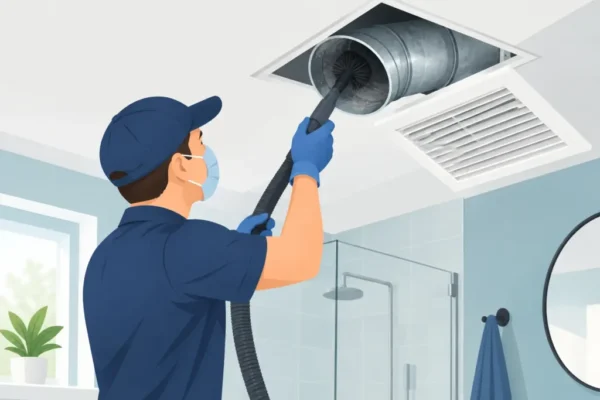
A bathroom fan that sounds normal but leaves mirrors fogged long after a shower is sending a clear message: moisture is not getting out of the house fast enough. Cleaning bathroom fan ductwork can restore proper airflow, reduce lingering odors, and help protect the ceiling, walls, and insulation around your bathroom from damp air.
The grille is the part most homeowners see, but it is only the beginning of the system. Behind the fan is a duct line that carries humid air to an exterior wall or roof cap. Dust, lint, construction debris, insect nests, disconnected joints, and damaged ducting can all limit that path. A clean fan housing will not solve a problem farther down the line.
Why Bathroom Fan Ductwork Needs Attention
Every shower, bath, and busy morning routine adds moisture to indoor air. The exhaust fan is designed to pull that moisture outside before it settles on colder surfaces. When the ductwork is dirty, crushed, leaking, or blocked, the fan has to work harder while removing less humidity.
That can lead to peeling paint, stained ceilings, persistent musty smells, mildew around caulking, and condensation on windows. Over time, excess moisture may also affect framing, attic insulation, and drywall. The issue is not always dramatic at first. Often, it starts with a bathroom that simply feels damp longer than it used to.
A blocked bathroom exhaust line is also a comfort issue. Odors remain in the room, and a weak fan can make a bathroom feel stuffy even with the door open. Proper ventilation supports a cleaner, more comfortable home while helping your HVAC system manage indoor humidity.
Signs Your Bathroom Vent Line May Be Blocked
You do not need to take apart your ceiling to spot every ventilation concern. Pay attention to changes in how the bathroom behaves after a shower. If condensation remains on the mirror or walls for 20 minutes or more, the fan may not be moving enough air. Water droplets on the ceiling, recurring mildew, or a damp smell are other warning signs.
Listen to the fan, too. A louder rattle can point to dust buildup in the fan housing or a loose component. A fan that runs quietly but seems ineffective may have a duct obstruction, a disconnected section, or an exterior vent cap that is stuck closed. In some homes, the fan may vent into an attic rather than outdoors. That setup should be corrected because it deposits warm, humid air where it can damage insulation and wood.
Outside, check the vent hood while the fan is running. You should feel steady air exiting the cap. Little or no airflow does not automatically mean the duct needs cleaning, but it is a reason to inspect the full system. A blocked cap, long duct run, or undersized fan can produce similar symptoms.
Cleaning Bathroom Fan Ductwork Starts With an Inspection
A thorough service begins by checking the entire route, not just vacuuming the grille. The fan cover and housing should be inspected for dust and debris. The technician should also assess the duct material, connections, routing, exterior termination, and airflow at the exit point.
This matters because cleaning is not the right answer for every problem. Flexible ducting can sag, tear, or become crushed. Old foil or plastic-style duct may be poorly sealed or may not meet current best practices. If the line is disconnected in the attic, cleaning it will not stop moist air from escaping into the wrong space. In those cases, repair or replacement provides the safer long-term solution.
The length and layout of the duct also matter. Bathroom fan ducts work best with a short, direct route outdoors and as few turns as practical. Multiple sharp bends create resistance that slows airflow and gives debris more places to collect. A professional inspection helps separate a routine cleaning need from a design or repair concern.
What a Proper Cleaning Service Should Address
Cleaning bathroom fan ductwork requires the right equipment and a careful approach. The goal is to remove buildup without tearing duct material, loosening joints, or pushing debris deeper into the system. Access can be through the fan opening, attic, exterior cap, or a combination of these points, depending on the home’s layout.
A complete service generally includes cleaning the fan grille and accessible housing, removing debris from the duct line, checking the exterior vent cap, and confirming that air is exhausting outdoors. The fan itself may need light cleaning as well, but electrical components should not be saturated or handled casually.
The exterior cap deserves special attention. Its flap should open freely while the fan runs and close when it stops. Screens can collect lint and dust, while outdoor hoods may become blocked by leaves, snow, nests, or windblown debris. If the cap is damaged, missing, or installed in a way that allows water into the duct, replacement may be recommended.
After cleaning, airflow testing provides a useful final check. A clear duct should improve performance, but the fan must still be properly sized for the room. A large bathroom, enclosed shower area, or bathroom with high household use may need more ventilation capacity than an older fan can provide.
Can You Clean It Yourself?
Homeowners can safely handle a few maintenance tasks. Turn off power at the breaker, remove the grille, and vacuum loose dust from the cover and accessible area around the housing. Wash the grille with mild soap and let it dry completely before reinstalling it. You can also clear obvious debris from the exterior hood if it is safely reachable from the ground.
The ductwork itself is different. Long, hidden runs are easy to damage, especially flexible ducts in attics. A household vacuum hose rarely reaches far enough to clean the full line, and improvised tools can puncture or disconnect duct sections. Roof-mounted caps introduce a fall risk, particularly in wet or icy conditions.
If you can see heavy buildup, have no exterior airflow, notice attic moisture, or suspect a disconnected line, professional service is the better choice. The right technician can clean the system while identifying problems that are not visible from the bathroom.
How Often Should Bathroom Fan Ductwork Be Cleaned?
There is no single schedule that fits every home. For many households, an inspection every one to three years is a sensible preventive maintenance starting point. Homes with several bathrooms, frequent showers, pets, recent renovations, or a history of moisture issues may benefit from more frequent checks.
Renovation dust is a common reason to inspect sooner. Drywall dust, insulation fibers, and other fine debris can settle in fan housings and duct lines after construction work. Similarly, a bathroom fan that has been running less effectively after an exterior storm may have a blocked or damaged vent cap.
The best schedule is based on performance, not just the calendar. If the fan clears moisture quickly and the exterior cap has strong airflow, routine cleaning may be enough. If the same symptoms keep returning, it is time to look beyond cleaning and evaluate the duct design, fan capacity, and vent termination.
Protect Your Home From Moisture Problems
Run the bathroom fan during showers and for about 20 minutes afterward to give humid air time to leave the home. Leaving the door slightly open after bathing can also help air circulate, but it should not replace proper exhaust ventilation. If your fan is controlled by a timer or humidity sensor, make sure the settings give it enough run time.
Do not ignore a fan that is weak, noisy, or ineffective. Moisture problems tend to spread quietly, and the visible stain or mildew spot is often only the first sign. A professional duct inspection can provide clarity before a small ventilation issue becomes a repair project.
YYT Safe Dryer Vents helps homeowners assess and service bathroom fan vent lines with the same safety-first approach used for other household vent systems. A clean, properly connected duct gives your fan a clear path to do the job it was installed to do: move damp air outside and help keep your home dry, healthy, and comfortable.